"Very little is needed to make a happy life; it is all within yourself, in your way of thinking." —Marcus Aurelius
I can't do some of the things I used to do—can't do them at all.I certainly can't do all of the things that I used to do.
Welcome to living in an aging body.
I keep returning to the idea that one of the "developmental tasks" of this stage of my life is to discover my essential life.
From Wikipedia: "In philosophy, essence is the attribute or set of attributes that make an object or substance what it fundamentally is, and which it has by necessity, and without which it loses its identity."
So how do I boil my life down to its essence?
My mother grew up during the Great Depression. She is a frugal woman. Most autumns, she would make wild grape jam. The grapes grew in abundance along the Kinnickkinnick River not far from our house. I suppose the land was owned by somebody, but we harvested wild grapes in autumn and watercress in the spring without feeling like we were stealing. My sister and I helped create the jams.
(If you haven't been around the jam making process, watch the 6 minute video "Boiling Down to Heightened Flavors: The Specialty Jams of Josephine's Feast." We didn't have her fancy copper pots [which I love], but you get the idea.)
So, with my endearing (I hope) tendency to stretch metaphor until it almost snaps, here are my steps to creating an essential life, as inspired by jam making.
Step 1 - Pick the fruit!
Make a list of the things about which you are passionate, what gives you joy, without which you imagine your life would not be your life. (You may want to check out Zen Habits' "Short but Powerful Guide to Finding Your Passion.")
Step 2 -Wash the jars and lids.
You may need to make some space in your life for the essentials. Free time. Get out of over-commitments, including those you've made to yourself. ["There was no need to do any housework at all. After four years the dirt doesn’t get any worse." —Quentin Crisp]
Step 3 -Wash and hull the fruit.
Look at your list and remove the hulls and stems.Are there things on your list that you put there because you think they ought to be there? Look at an item, say it to yourself, take a breath and pay attention to how your body is feeling. Do you feel heavy or tired or resigned? Leave on the list only those things that make you feel lighter energized or excited.
Step 4 - Crush the fruit.
When making jam, crushing the fruit gets it into manageable pieces and releases the natural pectin so it can thicken. Look at your list and define a "nibble." For instance, I am passionate about learning, but attending an eight week face-to-face college class is beyond my energy level. I can take a half-day workshop every now and then or attend a series of webinars.
Step 5 -Add the sweetener.
Different fruits require different amounts of sweetener. Some folks mix sweeter fruits with less sweet and use no artificial sweetener at all. I love listening to beautiful music and on rare occasions (someone comes to my house and plays it) I need no sweetener at all. Other times (going out to a concert) I need to add sweeteners (rest before, help with transportation) in order to make a good jam.
Step 6 - Mix the fruit with the pectin and cook to a full boil.
[Pectin, which occurs naturally in fruit, is what makes the jam "set" or thicken. The pectin you buy is natural apple pectin, but is more concentrated. Using pectin dramatically reduces the cooking time, which helps to preserve the vitamins and flavor of the fruit, and uses much less added sugar.]
What tools and tricks can help make my participation in my passion possible or easier? I love to write, but I couldn't do it these days without Dragon NaturallySpeaking from Nuance.com.
A "full boil" in this protracted metaphor is trying it in real life and paying attention to how it works.
Step 7 - Get the jars and lids sanitizing.
Are these spaces I created in my life spacious enough?Are there bits of old crud still adhering to the space I thought I cleared? I need to take another look and make sure things are really clean.
Step 8 - Add the remaining sweetener and bring to a boil again.
What about the sweetener?Maybe I thought I would be a purist and not add any, but I find myself avoiding the things I said I loved.Try adding some more sweetener. Make it easier Make it more fun..
Step 9 - Skim any excessive foam.
When too much air gets into the boil it produces foam which won't harm you but makes the jam looks scummy. Have I gone overboard in some way? Are there bits that are uncomfortable or exhausting now that I'm trying them in real life? Skim them away.
Step 10 - Test for "jell" (thickness).
In jam making, I put a little bit out and let it cool to room temperature. Is it the right consistency? In creating my essential life, I live it for a while and see if I have created the right balance between activity and rest, excitement and contentment, doing and being. Adjusting the ingredients or even remaking the jam can get it to the right consistency.
Step 11 - Fill the jars and put the lid and rings on
The size, shape and decorative nature of the jars are a matter of personal preference. It helps, though, to put some limits around each flavor, so I can appreciate each one.
Step 12 - Process the jars in the boiling water bath
The elements of my life should be surrounded by life itself, submerged beneath the roiling waters of day to day to day,stored for a while in a cool dark place and then brought out to be appreciated.
(Thanks to How to make Jam at PickYourOwn.org for jogging my memory.)
Report from last week's bingo experiment:
I thought about doing something noble ("listening to music" ) as a reward, but it was me trying to be better than I am. It turned out to be M&Ms .I did get one bingo and came very close to another two, so the card definitely has potential.
Have you had to adjust your activities as your body has changed? How have you adapted? What tools and tricks do you use? What are the challenges?
Friday, February 25, 2011

Friday, February 18, 2011
Self Care Bingo
The huge snow piles around me are beginning to melt. Surviving the cold is becoming less of an issue. I'm starting to believe there may be life after winter.
I'm remembering where I was – in many aspects of my life – in November and wanting to return to that optimistic energy.
Kerri Morrone Sparling, who writes about living with diabetes in her blog Six Until Nine, created an idea I found inspiring: "diabetes goal bingo."I don't understand enough about diabetes to know what her numbers mean, but I liked the idea of being playful and specific with health-related goals.
For my life, I needed to focus not on producing a result, but I'm taking an action. I did some reading about self-care basicsand found some lists. They range from Michael Courtney's four:
- diet
- sleep
- exercise
- breathing
- relax
- move
- be aware
- accept
- have patience
- timeout
- fear not
- ask for help
- trust your inner guide
- celebrate everything
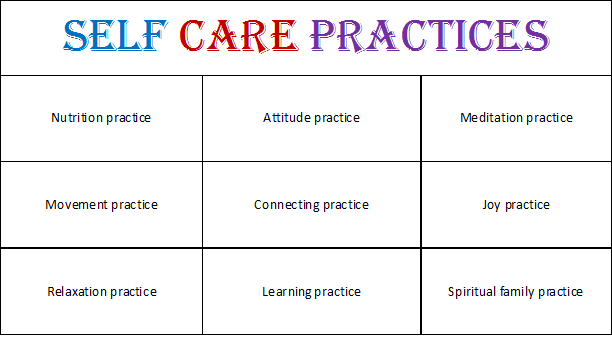
I personalized that table so it looked like this and became a "bingo card for the week: "
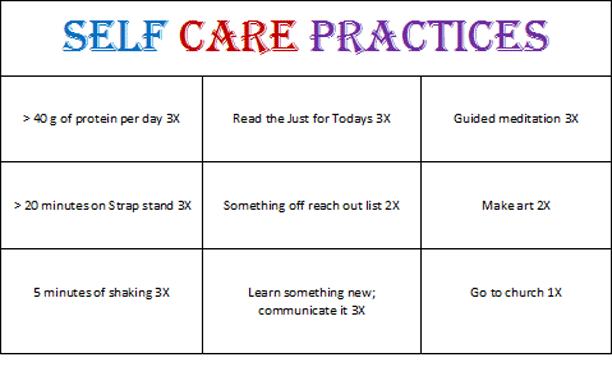
I will let you know next week what I decided to do about prizes. Meanwhile, if you would like to play along, here is the generic version in Microsoft Word format.
Friday, February 11, 2011
Attitudes and Experiments to Get to the New Normal
A woman asked me "how long does it take to get to that new normal?" She was talking about the idea that, living with chronic illness, our bodies change and we adjust until we get to a new normal.
I don't think my answer was very helpful. I talked about the process and amount of time being different for everybody. That's true, but it doesn't get many of us through the rough spots.
We're talking about dealing with change. One of the Carnegie coaches on the Dale Carnegie blog generalized: "In today’s workplace, there may be no more important skill than the ability to adapt successfully to change."
While all 21st century citizens are dealing with change, those of us coping with chronic illness are exploring new territory. It's no huge surprise that googling "new normal" took me to a "Survivorship Guide for Bone Marrow/Stem Cell Transplant" page.
Like others, our new normal is imposed by outward circumstance. Unlike others, our new normal is found within our own bodies, our own psyches, our own souls.
Standing in the way of my reaching a new normal, I find three things:
Attitudes helpful in the face of change
I don't think my answer was very helpful. I talked about the process and amount of time being different for everybody. That's true, but it doesn't get many of us through the rough spots.
We're talking about dealing with change. One of the Carnegie coaches on the Dale Carnegie blog generalized: "In today’s workplace, there may be no more important skill than the ability to adapt successfully to change."
While all 21st century citizens are dealing with change, those of us coping with chronic illness are exploring new territory. It's no huge surprise that googling "new normal" took me to a "Survivorship Guide for Bone Marrow/Stem Cell Transplant" page.
Like others, our new normal is imposed by outward circumstance. Unlike others, our new normal is found within our own bodies, our own psyches, our own souls.
Standing in the way of my reaching a new normal, I find three things:
- Grief. It's hard to let go of the me that was. I was comfortable, capable and more easy-going. The way of life being forced on me is not one I desired.
- Ignorance. I'm not sure what is involved. It's not clear what my body can do and can no longer do. I can only guess and pay the price in pain or exhaustion when I guess wrong.
- Impatience. As soon as I understand that things need to change I want to be done with it. I want to reach the point where things are comfortable again. I want it NOW.
Attitudes helpful in the face of change
- Change is a challenge. Getting to the new normal is not easy, but it is possible. If I have a competitive bone in my body, now is the time to engage it. Some people climb mountains, I get to the next new normal.
- Find the gift. Again, this is not easy. Finding the gift may feel like grasping at straws, but it is a worthy exercise. Grasp those straws and list the ways that this change will be change for the better. You don't have to believe it. You are just opening the door a crack.
- Try something new. I'm not a fan of change for its own sake, but having the attitude that I am going to "try something new" can help me embrace the new normal. It may not be forever. This may not be my final answer. For now, I'm going to try something new.
- Learn about the new you. Explore the contours of the change. Do exercises to find ou how your body has changed. By this I don't mean challenging your body, but moving it gently to find out what you can do now. Physical therapists are often helpful in this experiment.
- Explore your hidden judgments. Write a list: "people who [whatever you're dealing with] are..." Keep your hand moving and write as many items as you can manage. Look at and challenge each judgment.
- Practice loving you. I often listen to the Loving Kindness Meditation at the Mindfulness Awareness Research Center in UCLA. The process of extending loving kindness to my good friend, imagining her returning it and then practicing loving myself works for me. The article Waving goodbye to our old selves, and embracing our new existence at chronicbabe.com speaks to this issue.
- Celebrate the new new you. Have a special meal or give yourself a gift that celebrates your new self. You are, after all, evolving a new being. Reward yourself for the effort.
Saturday, January 29, 2011
Book Response: The Art of Happiness
I recently finished reading The Art of Happiness, a Handbook for Living by His Holiness the Dalai Lama and Howard C Cutler, M.D. The book is one of a series that made the New York Times and other bestseller lists. In it, Howard Cutler relates a series of conversations he had with the Dalai Lama and his own musings, as a psychiatrist, about them.
While my own highlights and notes tended to be quotes from the Dalai Lama, Cutler's comments and stories give the book a more practical and human feel than books written by His Holiness alone. (For psychology wonks like me, it's fun to read parallels between Buddhist philosophy and psychological theories.)
The ideas that stayed with me are simple but powerful:
"One begins by identifying those factors which lead to happiness," says His Holiness, "and those factors which lead to suffering. Having done this, one then sets about gradually eliminating those factors which lead to suffering and cultivating those which lead to happiness."
"Easier said than done," snarls my monster mind. Then I read about the meditation exercises practiced by Tibetan Buddhists.I remember the comments of a friend who visited Dharamsala, India, where the Dalai Lama settled after fleeing Tibet in 1959. She resisted comments of others who characterized Tibetans as "a happy people," but found herself thinking the same thing: "these people are so happy."
Being diagnosed with a progressive incurable illness seemed like an invitation to unhappiness. I suppose that I have been, ever since, trying to find a way to say "will not attend." Western psychology has given me some tools (such as cognitive therapy, visualization and creative expression) with which to make a different choice. This book reminded me of – or introduced me to – another set of tools, varieties of Buddhist meditations, that can redirect the motion of my life toward happiness.
While my own highlights and notes tended to be quotes from the Dalai Lama, Cutler's comments and stories give the book a more practical and human feel than books written by His Holiness alone. (For psychology wonks like me, it's fun to read parallels between Buddhist philosophy and psychological theories.)
The ideas that stayed with me are simple but powerful:
- The purpose of our life is to seek happiness.
- Happiness can be achieved through training the mind.
- Happiness gives us long term satisfaction and should not be confused with pleasure which is short-term.
- Developing compassion is important to our mental and physical health and our relationships with others.
- Cultivating basic spiritual values – goodness, kindness, compassion, caring – is critical to our own happiness and creates a less troubled society.
"One begins by identifying those factors which lead to happiness," says His Holiness, "and those factors which lead to suffering. Having done this, one then sets about gradually eliminating those factors which lead to suffering and cultivating those which lead to happiness."
"Easier said than done," snarls my monster mind. Then I read about the meditation exercises practiced by Tibetan Buddhists.I remember the comments of a friend who visited Dharamsala, India, where the Dalai Lama settled after fleeing Tibet in 1959. She resisted comments of others who characterized Tibetans as "a happy people," but found herself thinking the same thing: "these people are so happy."
Being diagnosed with a progressive incurable illness seemed like an invitation to unhappiness. I suppose that I have been, ever since, trying to find a way to say "will not attend." Western psychology has given me some tools (such as cognitive therapy, visualization and creative expression) with which to make a different choice. This book reminded me of – or introduced me to – another set of tools, varieties of Buddhist meditations, that can redirect the motion of my life toward happiness.
Friday, January 14, 2011
The Frugal Enthusiast
A nine-month-old has inspired me to describe myself in a new way. My newest creative experiment is to think of myself as a frugal enthusiast.
Charles Vachon posted a time lapse video of his nine-month-old son, Charles-Edward, as he played on the floor. Four hours of play were condensed into about two minutes of "synaptic exuberance."
Baby Edward's curiosity and sensory involvement are glorious to watch. Robert Krulwich, writing about the video on NPR's Sciencey Blog concludes,
My mother will turn 90 this year. She was describing how much more difficult it was this year to pack away the Christmas decorations. She just doesn't have the energy or stamina she used to have.
Though I am 40 years younger than she, I find myself in a similar situation. The natural losses of aging are compounded in my body by chronic illness.
We all have to give up something. The trick, of course, is to do it gracefully.
In the late '80s I watched a television show called "The Frugal Gourmet." Host Jeff Smith cooked good-tasting food prepared with an eye toward budget and prudent use of ingredients.
I love Baby Edward's engagement in the world. I remember the childhood feeling of wanting to do everything, to try everything. There is a piece of that I don't want to give up.
On the other hand, at my time of life, conscious choices are my allies. In a metaphorical Baby Edward's world, if I spend too much time kicking the oval basket, I may lose energy before I get to crawl under the chair in the corner. As we age, we get better at seeing our options. As a person dealing with chronic illness, I have to take a step back, consider the universe of choices and set priorities. If that chair is important, I better visit it first.
So I have arrived at the phrase "the frugal enthusiast." Frugal because I need to be economical, not wasteful, in my expenditure of energy. Enthusiast because I want to be a person active in interest. I would rather get excited about things for seconds than be bored for hours.
Charles Vachon posted a time lapse video of his nine-month-old son, Charles-Edward, as he played on the floor. Four hours of play were condensed into about two minutes of "synaptic exuberance."
Baby Edward's curiosity and sensory involvement are glorious to watch. Robert Krulwich, writing about the video on NPR's Sciencey Blog concludes,
"babies go wild making connections and then, as we grow into our preferences, our personalities, life is like a scalpel. We slowly shed what we don't need or use or want. Having watched Edward for those time lapsed four hours, it's hard to imagine what he’s going to give up later in life but he's got to give up something. We all do."
My mother will turn 90 this year. She was describing how much more difficult it was this year to pack away the Christmas decorations. She just doesn't have the energy or stamina she used to have.
Though I am 40 years younger than she, I find myself in a similar situation. The natural losses of aging are compounded in my body by chronic illness.
We all have to give up something. The trick, of course, is to do it gracefully.
In the late '80s I watched a television show called "The Frugal Gourmet." Host Jeff Smith cooked good-tasting food prepared with an eye toward budget and prudent use of ingredients.
I love Baby Edward's engagement in the world. I remember the childhood feeling of wanting to do everything, to try everything. There is a piece of that I don't want to give up.
On the other hand, at my time of life, conscious choices are my allies. In a metaphorical Baby Edward's world, if I spend too much time kicking the oval basket, I may lose energy before I get to crawl under the chair in the corner. As we age, we get better at seeing our options. As a person dealing with chronic illness, I have to take a step back, consider the universe of choices and set priorities. If that chair is important, I better visit it first.
So I have arrived at the phrase "the frugal enthusiast." Frugal because I need to be economical, not wasteful, in my expenditure of energy. Enthusiast because I want to be a person active in interest. I would rather get excited about things for seconds than be bored for hours.
Friday, December 31, 2010
Inviting Change: The Power of Less (book response)
[I have decided to post a few notes about a book before I mention it in my monthly newsletter. This is not a review of the literary value of the book, but rather a record of the response I had while reading it.]
The new year invited me to think and read about making positive changes. That's what New Year's resolutions are all about, right?
I was reminded what dangerous territory the idea of change is for me.
My adult life has been organized around coping with changes thrust upon me by living with a chronic illness. What with changes engendered by living at the turn-of-the-century and living through an uncertain economy, etc., most human beings are coping with enormous amounts of change. The new jargon for grace in response to change is "resilience." Building skills in this area is a survival mechanism for all of us.
But what about inviting change? I've been spending time recently with a book called The Power of Less, by Leo Babauta.
I was attracted to the book because Babauta is the author of the popular blog Zen Habits. I hoped he would not get too aggressive and heroic with his advice about how to make changes.
The book does, indeed, take a gentle and sane approach to change. Babauta encourages us to identify what is essential in our lives and eliminate the rest. It is about simplification.
I enjoyed and was inspired by the first 60 or so pages and then found myself getting into trouble. It took me a few days of processing (I'm not the fastest heifer in the stampede) before I realized my difficulty and made accommodations.
Babauta's Power of Less Principles-- and his explanation of them-- are fine:
In the second part of the book, "In Practice," he gives examples of how to apply the principles in various areas of our lives. I found myself getting more and more frustrated with this section, until I identified my difficulty.
My problem, it turns out, is that I have little control over the practicalities of my life. I can't, for instance, get up half an hour earlier and create a new morning routine without inconveniencing several people. I have to have help to get out of bed, get dressed, have a cup of tea… I have to have help with pretty much everything on his morning routine list. I ran into similar trouble with many of Babauta's suggestions.
I returned, as I often do, to the safety of the serenity prayer: God grant me the serenity to accept the things I cannot change, the courage to change the things I can and the wisdom to know the difference.
Babauta's book encourages us to think about goals and projects. To his process, I need to add:
My experience is that asking for help comes with a cost. If I have consciously decided to ask for help and accept the cost, then I will find it easier to make the changes I want to make.
Babauta's emphasis on focused, small, present-oriented changes makes it a good fit for someone like me who is working within limitations. As with most life processes, however, I have to take a little extra time to tailor his suggestions to my specific needs.
The new year invited me to think and read about making positive changes. That's what New Year's resolutions are all about, right?
I was reminded what dangerous territory the idea of change is for me.
My adult life has been organized around coping with changes thrust upon me by living with a chronic illness. What with changes engendered by living at the turn-of-the-century and living through an uncertain economy, etc., most human beings are coping with enormous amounts of change. The new jargon for grace in response to change is "resilience." Building skills in this area is a survival mechanism for all of us.
But what about inviting change? I've been spending time recently with a book called The Power of Less, by Leo Babauta.
I was attracted to the book because Babauta is the author of the popular blog Zen Habits. I hoped he would not get too aggressive and heroic with his advice about how to make changes.
The book does, indeed, take a gentle and sane approach to change. Babauta encourages us to identify what is essential in our lives and eliminate the rest. It is about simplification.
I enjoyed and was inspired by the first 60 or so pages and then found myself getting into trouble. It took me a few days of processing (I'm not the fastest heifer in the stampede) before I realized my difficulty and made accommodations.
Babauta's Power of Less Principles-- and his explanation of them-- are fine:
- Set limitations.
- Choose the essential.
- Simplify.
- Focus.
- Create habits.
- Start small.
In the second part of the book, "In Practice," he gives examples of how to apply the principles in various areas of our lives. I found myself getting more and more frustrated with this section, until I identified my difficulty.
My problem, it turns out, is that I have little control over the practicalities of my life. I can't, for instance, get up half an hour earlier and create a new morning routine without inconveniencing several people. I have to have help to get out of bed, get dressed, have a cup of tea… I have to have help with pretty much everything on his morning routine list. I ran into similar trouble with many of Babauta's suggestions.
I returned, as I often do, to the safety of the serenity prayer: God grant me the serenity to accept the things I cannot change, the courage to change the things I can and the wisdom to know the difference.
Babauta's book encourages us to think about goals and projects. To his process, I need to add:
- Identify tasks wherein I have control.
- Identify tasks with which I would need to ask for help.
- Decide with which tasks I am willing to ask for help.
- Identify potential helpers.
- Ask for help as decided.
My experience is that asking for help comes with a cost. If I have consciously decided to ask for help and accept the cost, then I will find it easier to make the changes I want to make.
Babauta's emphasis on focused, small, present-oriented changes makes it a good fit for someone like me who is working within limitations. As with most life processes, however, I have to take a little extra time to tailor his suggestions to my specific needs.
Friday, December 17, 2010
Working with a Broken System
What does living with disability teach me about working with a broken system?
This week I had the opportunity to bang into two broken systems.
First, the public health nurse who came to do my annual PCA evaluation (wherein she evaluates whether I still need the services of a personal care attendant) asked if my husband and I had discussed getting divorced so that, when I have to quit work, I will be able to continue to have a PCA. Second, I rode Metro Mobility, our local paratransit system and waited for my ride for an hour beyond the promised pickup time.
As I was bumping along in the bus, I realized I'm going to have to get better at working with broken systems. The good news is I'm not alone.
I googled "broken system" and discovered that I am surrounded by them. Our financial, immigration, education and healthcare systems have been described as broken…and that's just the first page of results!
So, hmm, what do I know about broken systems? Oh, right! I live in this body, which some people would no doubt describe is a broken system. Can't get much closer than that.
Learn as much as you can handle
Knowledge is power. The more I learn about how this system works, the more resourceful I will be in response.
On the other hand, there is more to know than I can take. I have to look at the big picture and make some guesses about what knowledge will be the most helpful. I have to learn a piece at a time or I get too overwhelmed.
Identify the experts
There are people who already know a lot about the system. If I can figure out who they are and talk to them, they can help me learn more quickly and efficiently.
I also need to remember that some of the experts do not have titles or letters behind their names. They are, as jargon has it, "consumers"-- those folks who have wrestled with the system from the inside out.
Notice what's working
Broken systems are so obviously broken that it's easy to miss what's working. I need to pay attention to what goes smoothly and easily. When I find those things, I need to:
About what's not working...
What's glaringly obvious about a broken system, of course, are all the things that are wrong with it. When I bump into those things, I can ask two questions:
What if it just stinks?
Suppose I can't--even with help--do anything, my advocacy efforts have come to naught and the system is still broken?
Sometimes, the best offense is a good defense.
I need to protect myself, body, mind and spirit.
Having learned about the system and identified the experts and influencers, I can figure out what rules (nonsensical though they may be) are in place that might help me get what I need.
I can bear in mind that broken systems often don't make sense; it's not necessarily that something's wrong with me.
I can cultivate a state of mind and spirit that allow me to exist amidst the chaos. I need to put some thought, creativity and effort into creating my "bureaucratic happy place" whence, faced with the inequities and complexities of the broken system, I can retreat.
As it turns out, I have a lot of ideas about working with a broken system. Isn't it great (sarcasm) that I will have so many opportunities to practice them!
This week I had the opportunity to bang into two broken systems.
First, the public health nurse who came to do my annual PCA evaluation (wherein she evaluates whether I still need the services of a personal care attendant) asked if my husband and I had discussed getting divorced so that, when I have to quit work, I will be able to continue to have a PCA. Second, I rode Metro Mobility, our local paratransit system and waited for my ride for an hour beyond the promised pickup time.
As I was bumping along in the bus, I realized I'm going to have to get better at working with broken systems. The good news is I'm not alone.
I googled "broken system" and discovered that I am surrounded by them. Our financial, immigration, education and healthcare systems have been described as broken…and that's just the first page of results!
So, hmm, what do I know about broken systems? Oh, right! I live in this body, which some people would no doubt describe is a broken system. Can't get much closer than that.
Learn as much as you can handle
Knowledge is power. The more I learn about how this system works, the more resourceful I will be in response.
On the other hand, there is more to know than I can take. I have to look at the big picture and make some guesses about what knowledge will be the most helpful. I have to learn a piece at a time or I get too overwhelmed.
Identify the experts
There are people who already know a lot about the system. If I can figure out who they are and talk to them, they can help me learn more quickly and efficiently.
I also need to remember that some of the experts do not have titles or letters behind their names. They are, as jargon has it, "consumers"-- those folks who have wrestled with the system from the inside out.
Notice what's working
Broken systems are so obviously broken that it's easy to miss what's working. I need to pay attention to what goes smoothly and easily. When I find those things, I need to:
- celebrate!
- thank the folks who are doing a good job
- think of ways I can strengthen these pockets of righteousness. (See "advocate" below.)
About what's not working...
What's glaringly obvious about a broken system, of course, are all the things that are wrong with it. When I bump into those things, I can ask two questions:
- Can I make it better?
If yes, then hahloo hahlay, I should just have at it! If no, see question #2. - Could I fix it if I had help?
If yes, then I can rally the troops and take action. If no, see question #3. - Do I know who can make it better?
If yes, then I can contact them, let them know what I see is wrong and tell them any ideas I have about how to fix it. This is called advocacy. Unfortunately, many of the consumers of broken systems are unable to do it because of lack of knowledge and resources (including personal energy). If I can do it, I should! (Real Genius fans say it with me: "it's a moral imperative.")
If no, then I can do research to try to find out who can influence this system.
What if it just stinks?
Suppose I can't--even with help--do anything, my advocacy efforts have come to naught and the system is still broken?
Sometimes, the best offense is a good defense.
I need to protect myself, body, mind and spirit.
Having learned about the system and identified the experts and influencers, I can figure out what rules (nonsensical though they may be) are in place that might help me get what I need.
I can bear in mind that broken systems often don't make sense; it's not necessarily that something's wrong with me.
I can cultivate a state of mind and spirit that allow me to exist amidst the chaos. I need to put some thought, creativity and effort into creating my "bureaucratic happy place" whence, faced with the inequities and complexities of the broken system, I can retreat.
As it turns out, I have a lot of ideas about working with a broken system. Isn't it great (sarcasm) that I will have so many opportunities to practice them!
Subscribe to:
Posts (Atom)


 Posts


